Complete Uninstallation of ODP

In this document, we will guide you through the process of uninstalling Ambari, the robust platform for managing big data clusters, and completely uninstalling Acceldata's open-source data platform. Whether you are transitioning to a different solution or simply looking to clean up your environment, our step-by-step instructions will ensure a seamless removal process, allowing you to effectively manage your data infrastructure.

Stop all Services

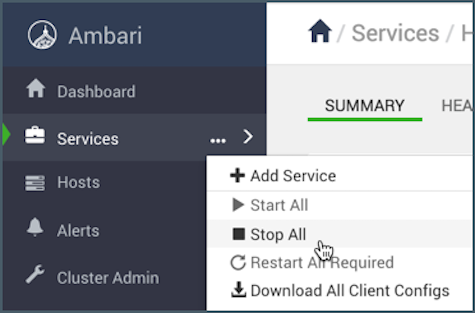
To stop all services at once, perform the following:

  1. Navigate to your Ambari console.

  2. Click Services from the left navigation menu. A drop-down menu is displayed.

  3. Click Stop All.


Note

If all the services are not stopped successfully, you need to manually kill all the processes on all nodes by using the following command to list and then kill them.

ps -u hdfs kill PID

Host Clean-Up with HostCleanup.py

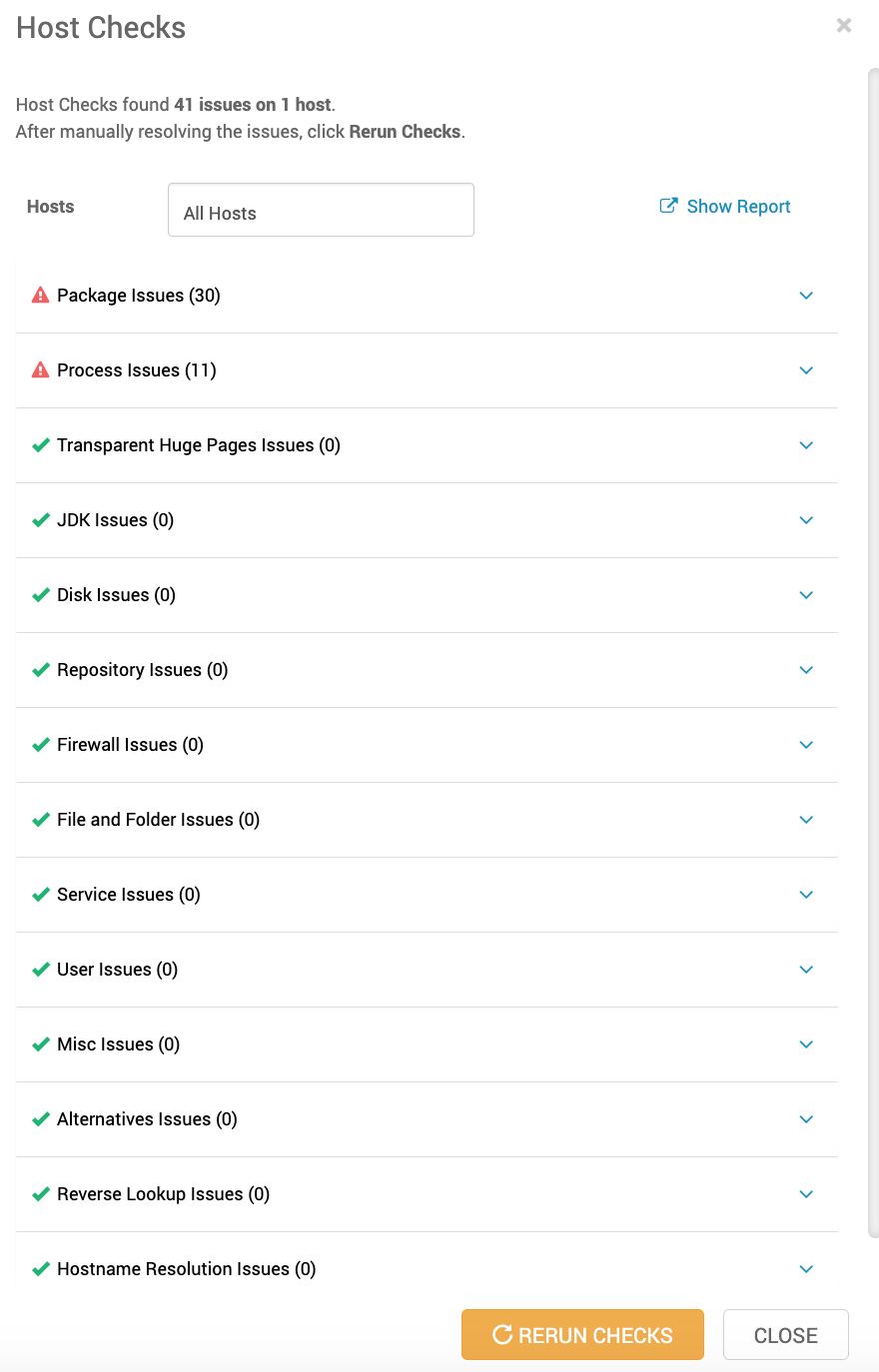
Ambari provides a HostCleanup.py script to automate the removal of packages, users, directories, repositories, processes, and alternatives based on a host-check report. Below is the combined, easy-to-follow usage for ODP uninstallation.

Locate the Host-Check Report

When you perform a host check, the report is saved at the below location.

Navigation: In the Ambari UI, navigate to Hosts → select hosts → Host ActionsCheck Host.

/var/lib/ambari-agent/data/hostcheck_custom_actions.result

This JSON-like file lists all the ODP-related packages and files detected on the host.

Script Usage and Options

Usage: HostCleanup.py [options] Options: -h, --help Show help message and exit. -v, --verbose Increase output verbosity. -f FILE, --file=FILE Read host-check report from FILE. -o FILE, --out=FILE Write detailed log to FILE. -k SKIP, --skip=SKIP Comma-separated items to skip: packages,users,directories,repositories,processes,alternatives. -s, --silent Accept default prompts without confirmation. # By default, removes all items not listed in --skip.

Note The script doesn’t just uninstall ODP components—it removes all listed packages and any software that depends on them, including OS-level libraries or utilities. If you only want to clean up the ODP files and leave your system packages intact, add --skip=packages (or --skip=users,packages) to the command.

Example Commands

  1. Cleanup everything except user accounts.

python /usr/lib/ambari-agent/lib/ambari_agent/HostCleanup.py --silent --skip=users
  1. Skip both users and ODP packages along with their dependencies.

python /usr/lib/ambari-agent/lib/ambari_agent/HostCleanup.py --silent --skip=users,packages
  1. Verbose log to a file.

python /usr/lib/ambari-agent/lib/ambari_agent/HostCleanup.py -v --silent
Info

If you have any other additional packages, you need to remove them manually.

Remove log folders on all nodes

To remove all log folders on all nodes, run the following commands:

rm -rf /var/log/hadoop rm -rf /var/log/hbase rm -rf /var/log/hadoop-mapreduce rm -rf /var/log/hadoop-yarn rm -rf /var/log/hive rm -rf /var/log/hive-hcatalog rm -rf /var/log/hive2 rm -rf /var/log/knox rm -rf /var/log/oozie rm -rf /var/log/solr rm -rf /var/log/impala rm -rf /var/log/zookeeper rm -rf /var/log/spark rm -rf /var/log/spark2

Remove Hadoop directories including HDFS data on all hosts

To remove Hadoop directories including HDFS data on all hosts, run the following commands:

rm -rf /hadoop rm -rf /hdfs/hadoop rm -rf /hdfs/lost+found rm -rf /hdfs/var rm -rf /tmp/hadoop rm -rf /usr/bin/hadoop rm -rf /usr/odp rm -rf /var/hadoop

To remove the configuration directories on all nodes, run the following commands:

rm -rf /etc/hadoop rm -rf /etc/hadoop-httpfs rm -rf /etc/hbase rm -rf /etc/hive2 rm -rf /etc/hive rm -rf /etc/hive-hcatalog rm -rf /etc/hive_llap rm -rf /etc/impala rm -rf /etc/knox rm -rf /etc/livy* rm -rf /etc/oozie rm -rf /etc/phoenix rm -rf /etc/pig rm -rf /etc/ranger-admin rm -rf /etc/ranger-usersync rm -rf /etc/spark2 rm -rf /etc/tez rm -rf /etc/zookeeper rm -rf /etc/tez* unlink /etc/ranger/kms/conf

To delete ODP related repositories, run the following commands:

rm -rf /etc/yum.repos.d/odp.repo rm -rf /etc/yum.repos.d/ambari-odp-1.repo yum clean all

To remove all library folders on cluster Host, run the following commands:

rm -rf /var/lib/hadoop-hdfs rm -rf /var/lib/hadoop-mapreduce rm -rf /var/lib/hadoop-yarn rm -rf /var/lib/hive* rm -rf /var/lib/impala rm -rf /var/lib/spark* rm -rf /var/lib/knox rm -rf /var/lib/livy3 rm -rf /var/lib/ambari-infra-solr-client

To clear out hue from usr/local , run the following command:

rm -rf /usr/local/hue*

Remove PIDs on all Hosts

To remove PIDs on all hosts, run the following commands:

rm -rf /var/run/hadoop rm -rf /var/run/hadoop-mapreduce rm -rf /var/run/hadoop-yarn rm -rf /var/run/hadoop-yarn-hbase rm -rf /var/run/hbase rm -rf /var/run/hive* rm -rf /var/run/knox rm -rf /var/run/impala rm -rf /var/run/livy3 rm -rf /var/run/spark* rm -rf /var/run/ranger* rm -rf /var/run/oozie rm -rf /var/run/zookeeper

Remove symlinks on all clusters' hosts (from /usr/bin)

To remove symlinks on all clusters hosts from /user/bin, run the following commands:

cd /usr/bin rm -rf /usr/bin/odp-select unlink hbase unlink hdfs unlink hive unlink hiveserver2 unlink beeline unlink kafka unlink mapred unlink oozie unlink oozied.sh unlink ranger-admin unlink ranger-admin-start unlink ranger-admin-stop unlink ranger-kms unlink ranger-usersync unlink ranger-usersync-start unlink ranger-usersync-stop unlink yarn unlink zookeeper-client unlink zookeeper-server unlink zookeeper-server-cleanup ## use ls -l | grep odp to check for any undeleted symlinks

Remove symlinks on all clusters' hosts (from /usr/odp/current)

To remove symlinks on all clusters' hosts from /usr/odp/current, run the following commands:

cd /usr/odp/current rm -rf oozie-client for file in hadoop*; do unlink "$file"; done for file in hbase*; do unlink "$file"; done for file in hive*; do unlink "$file"; done for file in livy*; do unlink "$file"; done for file in oozie*; do unlink "$file"; done for file in ranger*; do unlink "$file"; done for file in yarn*; do unlink "$file"; done for file in kafka*; do unlink "$file"; done for file in knox*; do unlink "$file"; done for file in spark*; do unlink "$file"; done for file in tez*; do unlink "$file"; done for file in zookeeper*; do unlink "$file"; done

Note If some files or directories are not deleted, you must remove them manually by using the following commands:

cd /usr/odp/3.2.3.1-2 rm -rf /usr/odp/3.2.3.1-2 rm -rf /usr/odp/

To clear out the security conf & keytabs for the ODP components, run the following commands:

rm -rf /etc/security/limits.d/* rm -rf /etc/security/keytabs/

To delete users, run the following commands:

userdel -r hbase userdel -r hcat userdel -r hdfs userdel -r hive2 userdel -r kafka userdel -r knox userdel -r mapred userdel -r oozie userdel -r ranger userdel -r spark userdel -r sqoop userdel -r tez userdel -r yarn userdel -r zookeeper

Remove Existing Files

To delete more existing files and directories manually, find them and run the following command:

find / -type f \( -name "*beeline*" -o -name "*hadoop*" -o -name "*hbase*" -o -name "*hdfs*" -o -name "*odp*" -o -name "*hive*" -o -name "*hiveserver2*" -o -name "*kafka*" -o -name "*mapred*" -o -name "*oozie*" -o -name "*ranger*" -o -name "*sqoop*" -o -name "*yarn*" -o -name "*zookeeper*" \) | egrep -v "ambari|spool|jdk64|doc|share|repository|site-packages|locale|distutils"

On completion of the above steps, ODP undergoes a thorough uninstallation, and the Hadoop cluster is effectively cleaned up.

Retain Ambari

To retain Ambari and only erase DB and its data, run the following commands:

ambari server stop ambari-server reset ## after this you'll have to recreate the ambari db in mysql

Set Up Fresh Ambari Database

To set up fresh Ambari database, run the following commands:

ambari-server setup ambari-server start

Complete Uninstallation of Ambari

  1. Stop and remove the ambari-server (on Ambari host) and ambari-agent (on all nodes), by running the following commands:

ambari-server stop ambari-agent stop yum erase ambari-server yum erase ambari-agent
  1. Remove log folders on all nodes, by running the following commands:

rm -rf /var/log/ambari-agent rm -rf /var/log/ambari-server
  1. Remove config folders on all nodes, by running the following commands:

rm -rf /etc/ambari-agent rm -rf /etc/ambari-server

Delete Ambari related repos, by running the following commands:

rm -rf /etc/yum.repos.d/ambari.repo yum clean all
  1. Remove PIDs on all nodes, by running the following commands:

rm -rf /var/run/ambari-agent rm -rf /var/run/ambari-server
  1. Remove library folders on all nodes, by running the following commands:

rm -rf /usr/lib/ambari-agent rm -rf /usr/lib/ambari-server-backups rm -rf /var/lib/ambari-agent rm -rf /var/lib/ambari-server

To delete users, run the following command:

userdel -r ambari-qa
  1. Manually find and delete more existing files and directories, by running the following command:

find / -name *ambari*


  Last updated