
You must complete the following steps in the following sub-sections to install Ambari. The Ambari repositories can be accessed via the URLs from Accessing Acceldata Repositories. For any doubts, reach out to the Acceldata Support team.
Follow the instructions in the section for the operating system that runs your installation host.
RHEL 8/9/RL 8/9Ubuntu 20/22
Use a command-line editor to perform each instruction.
RHEL 8/9/RL 8/9
On a server host that has Internet access, use a command-line editor to perform the following:
Steps
Log in to your host as root.
Add
ambari.repofile with the following content on all your cluster nodes.
File name: vi /etc/yum.repos.d/ambari.repo
Do not modify the ambari.repo file name. This file is expected to be available on the Ambari Server host during the Agent registration.
Confirm that the repository is configured by checking the repo list.
You must see values similar to the following for Ambari repositories in the list. (Version values vary, depending on the installation).
Next, install the Ambari bits using
yum install ambari-serveron your server node.Enter
ywhen prompted to confirm transaction and dependency checks.
When deploying a cluster having limited or no Internet access, you must provide access to the bits using an alternative method.
Ambari Server by default uses an embedded PostgreSQL database. When you install the Ambari Server, the PostgreSQL packages and dependencies must be available for installation. These packages are typically available as part of your Operating System repositories. Confirm that you have the appropriate repositories available for the postgresql-server packages.
Ubuntu 20/22
On a server host that has Internet access, use a command-line editor to perform the following:
Steps
Add
ambari.listfile with the following content on all your cluster nodes.
File name: sudo vi /etc/apt/sources.list.d/ambari.list
Example for Ubuntu 20:
After adding
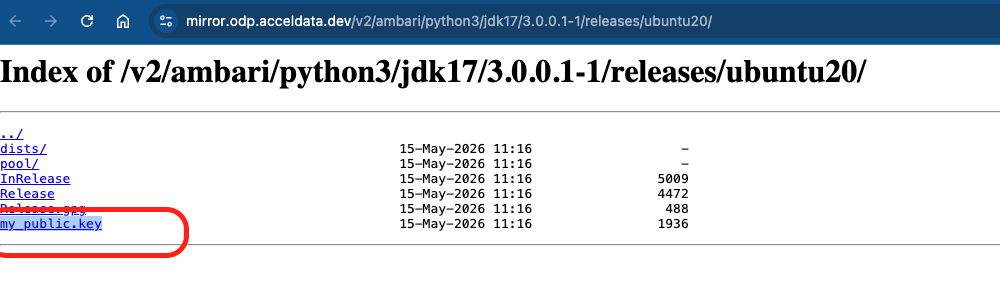
ambari.list, add the key.
For example: For ubuntu-20 repo's,
You can get this my_public.key from Accessing Acceldata Repositories.
Next, install the Ambari bits on the node that you want to make into an Ambari server.
Confirm that the Ambari packages downloaded successfully by checking the package name list.
When deploying a cluster having limited or no Internet access, you must provide access to the bits using an alternative method.